What should you do with debris during a home renovation? Identify materials as work progresses, separate reusable items and belongings that stay, keep walkways and work zones reasonably clear, and review heavy or special materials before loading. Plan scheduled hauling or a customer-loaded trailer that fits your project, access, and approved debris.
Home renovation debris is the material left after remodeling, such as removed cabinets, drywall, lumber, flooring, fixtures, trim, and packaging. A cleanup plan helps homeowners, landlords, property managers, and contractors decide what can leave, what needs review, and when to arrange removal. This guide explains that planning process; for crew loading and hauling, see our construction and renovation debris removal service.
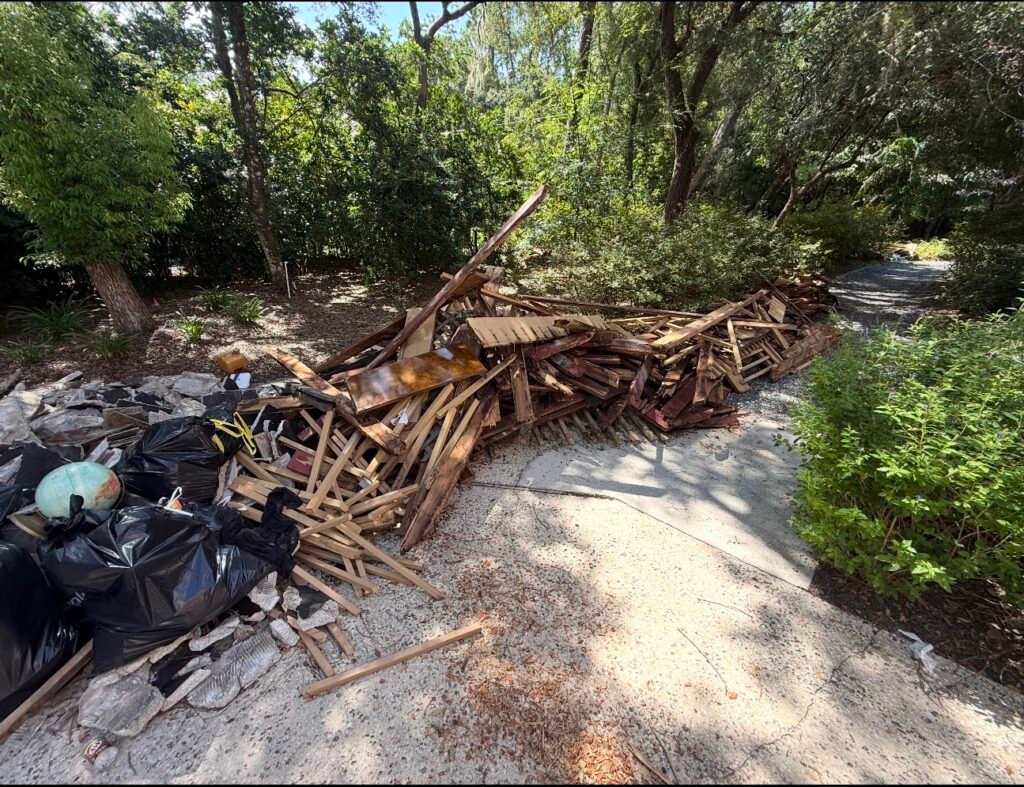
Whether you’re a homeowner, contractor, builder, or property manager, we provide fast, dependable construction debris removal services throughout Clearwater, Palm Harbor, Largo, Dunedin, Tarpon Springs, Trinity, New Port Richey, Tampa, and surrounding communities.
Plan home renovation debris cleanup in seven steps
- Identify what is coming out. List the rooms, materials, and bulky items involved. Photos help explain the scope, but include material types, stairs, and carrying distances too.
- Protect what stays. Clearly separate keep items, usable cabinets, fixtures, and household belongings from the removal pile. Confirm decisions with the property owner before anything is loaded.
- Separate dense and special materials. Flag concrete, brick, tile, soil, roofing shingles, and any unknown or regulated materials for advance review.
- Keep a clear carrying path. Agree on a staging area that leaves entrances, walkways, and work zones accessible. Coordinate placement with the people performing the renovation.
- Choose removal checkpoints. Decide when debris needs to leave: after a tear-out stage, before a delivery, between rooms, or at project completion.
- Choose who will load. Compare crew-loaded removal with a customer-loaded dump trailer based on labor, timing, access, material type, and placement.
- Confirm scope and scheduling. Review approved materials, estimated volume and weight, access, and the upfront estimate before major debris accumulates. Confirm any change in scope before loading.
What renovation materials should you identify?
Start with a material checklist. Drywall and lumber differ from a load of tile or mixed containers; a photo of the pile alone may not show the weight or disposal requirements. Common renovation debris to discuss includes:
- Drywall, lumber, trim, and removed cabinets.
- Flooring and fixtures, with the material type identified.
- Cardboard, packaging, and other project-related waste.
- Old furniture and household contents being removed as part of the renovation.
- Other remodeling debris, subject to approval.
This is a planning checklist, not automatic acceptance of every material. Condition, quantity, contamination, access, and disposal requirements affect approval. Check our accepted and restricted items guide before combining materials.
Why do heavy and special materials need advance review?
Weight can limit a load before the trailer or truck looks full. Concrete, dirt, soil, brick, block, tile, roofing shingles, stone, and plaster need advance review for quantity, loading, transport, and disposal requirements. Describe dense materials separately rather than treating them as ordinary bulky household junk.
Paint, chemicals, fuels, batteries, unknown containers, asbestos concerns, medical waste, and other regulated materials may require advance approval and an appropriate disposal pathway. Do not put unapproved materials into a standard pickup or rental load. If you suspect asbestos or cannot identify a material, pause that part of the cleanup and seek qualified guidance.
For local disposal questions, the existing Pinellas County disposal search tool can help identify the relevant category. Confirm the current destination requirements before arranging disposal.
Should I use junk removal or a dump trailer during a renovation?
Full-service removal means the crew lifts, loads, and hauls approved material. A dump trailer means the customer or contractor loads approved material during the rental period. The right option depends on labor, project duration, debris type, access, volume and weight, and safe placement.
- Choose crew-loaded removal when: you do not want to load, bulky household items are included, stairs or long carrying distances need review, or an accumulated pile needs to leave between renovation stages. Review full-service junk removal and confirm the scope and price before loading.
- Consider a customer-loaded trailer when: material accumulates over several days, you or your contractor can load, safe placement is available, and confirmed rental terms fit the project. Review dump trailer rental options for current terms, material approval, and availability.
Neither option is universally cheaper or better. A small but very heavy load, difficult access, or a project that changes duration can affect the decision. For a broader local comparison, see junk removal vs. dump trailer rental in Tarpon Springs.
Coordinate cleanup with the homeowner and contractor
Agree on who approves removal, who identifies materials, and who confirms access and timing. A landlord or property manager may need to coordinate occupied areas, while a contractor may need debris cleared before the next stage. No More Junk provides approved removal or trailer rental; construction work and project decisions remain with the homeowner and their renovation team.
If a renovation also involves sorting belongings before a move, use our step-by-step home decluttering guide for that separate task. If the scope extends to an entire property’s contents, review estate and property cleanout services. Keep protected belongings separate from the renovation pile.
Renovation cleanup questions
How often should renovation debris be removed?
Schedule removal around the work stages and available staging space. Arrange a pickup before debris obstructs access or interferes with the next stage, and confirm availability ahead of major tear-out work.
Can junk removal companies take drywall and lumber?
Drywall and lumber may be accepted after review of condition, quantity, access, and disposal requirements. Tell No More Junk what is in the pile and flag any suspected contamination or special material before scheduling.
What renovation materials need advance approval?
Dense materials such as concrete, tile, brick, soil, plaster, stone, and shingles need advance review. Paint, chemicals, fuels, batteries, unknown containers, asbestos concerns, and other regulated materials may need a separate approved disposal pathway.
Can a contractor arrange junk removal during remodeling?
Yes. A contractor can coordinate approved material removal between project stages. Confirm authorization, scope, material types, access, and scheduling with the property owner and No More Junk before loading.
How do I keep a renovation area clear while work is underway?
Use an agreed staging area, keep entrances and carrying paths accessible, and schedule removal around the work sequence. Separate keep items and materials awaiting approval so they are not accidentally included.
What should I separate before debris is hauled away?
Separate belongings that stay, reusable items, dense materials, and anything unknown or regulated. Identify these groups to the removal crew or rental provider before loading; do not assume mixed debris is automatically approved.
How should I plan renovation garbage removal costs?
Start with an upfront estimate based on the approved materials and removal scope. Confirm the scope and price before loading. Our junk removal pricing guide explains cost factors; a renovation load still needs its own review.
Have renovation debris ready to go?
Request an upfront estimate for full-service removal. Call 727-900-5475, text photos and project details, email info@nomorejunkfl.com, or contact No More Junk. Mention material types, stairs, access, and your preferred timing so approval and scheduling can be confirmed.
Prefer to load approved material yourself? Ask about dump trailer availability and current rental terms.
No Junk. No Hassle. Just Gone.